How to Set Realistic Goals and Benchmarks for Your First 30 Days on WhatsApp
Starting WhatsApp marketing can feel exciting. You have a list of contacts, a message to share, and a business goal you want to achieve. But after sending your first campaign, you may start wondering: How many people should read my message? How many replies should I expect? And how do I know if my campaign…
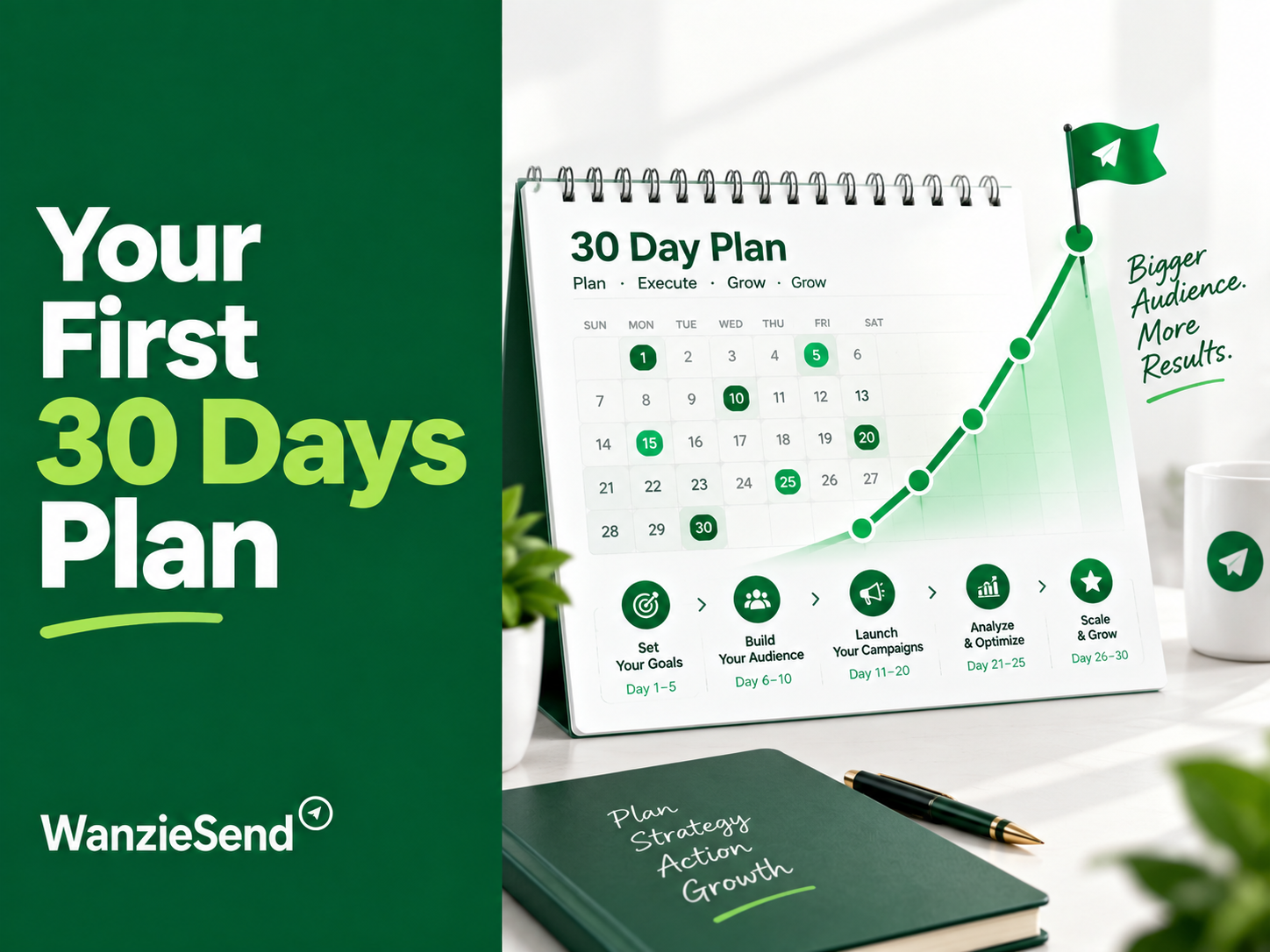
Originally published by Time Booster Marketing
The key is to set realistic goals before you start measuring results.
Your first 30 days on WhatsApp should be about learning how your audience responds, establishing a performance baseline, and identifying opportunities to improve. Instead of expecting immediate sales or thousands of replies, focus on understanding what works for your business.

Here is how to set practical WhatsApp marketing goals and benchmarks for your first month.
1. Choose One Primary Goal for Your First 30 Days
Before sending your first WhatsApp campaign, decide what you want to achieve.
It is tempting to pursue several objectives at once, such as increasing sales, generating leads, promoting a new product, and growing brand awareness. However, trying to measure everything at the same time can make it difficult to understand what is actually working.
Choose one primary goal and use it to guide your campaign.
For example:
- Generate enquiries: Encourage recipients to ask questions about your products or services.
- Drive sales: Promote a specific offer and track purchases that result from the campaign.
- Increase event registrations: Invite contacts to register for a webinar, workshop, or business event.
- Reactivate customers: Reach previous customers with relevant updates or offers.
- Increase product awareness: Introduce a new product and measure how many people engage with the information.
Your primary goal should determine the message you send and the metric you use to evaluate success.
If your goal is to generate enquiries, replies and qualified leads may matter more than immediate sales. If you want to drive purchases, you should track completed transactions rather than relying on message reads alone.
A simple rule: Choose one primary goal, one main success metric, and a small number of supporting metrics.
This keeps your first month focused and makes your results easier to interpret.
2. Establish Your Baseline Before Setting Targets
A benchmark is a reference point you use to evaluate performance. During your first month, you may not have enough historical data to know what good performance looks like for your audience.
That is normal.
Rather than adopting arbitrary industry averages, start by recording what happens in your own campaigns.
Track these core metrics:
| Metric | What it tells you |
|---|---|
| Messages delivered | How many messages successfully reached recipients. |
| Read rate | The proportion of delivered messages reported as read, where this data is available. |
| Reply rate | The proportion of delivered messages that generated replies. |
| Qualified enquiries | The number of responses from people who show genuine interest in your offer. |
| Conversions | The number of recipients who complete your desired action, such as purchasing or registering. |
| Opt-outs and negative feedback | Whether recipients are asking to stop receiving messages or reacting negatively. |
Not every WhatsApp setup provides the same reporting features. Available metrics depend on whether you use the WhatsApp Business app, the WhatsApp Business Platform, or a campaign tool connected to the platform.
Record the metrics your setup supports and avoid treating unavailable data as zero.
For example, if you send 100 messages and 90 are delivered, your delivered-message baseline is 90%. If 18 of those delivered messages are reported as read, the read rate is 20%, provided your reporting accurately captures those reads.
This is simply an illustration of how to calculate a metric, not a recommended performance target.
Over several campaigns, your own results will help you establish more meaningful expectations.

3. Set Realistic Expectations for Delivery, Reads, and Replies
One of the biggest mistakes beginners make is expecting every delivered message to be read and every read message to generate a reply.
These are different stages of audience engagement. Each one depends on different factors.
Delivery: Did the Message Reach the Recipient?
Delivery is an important first checkpoint.
If delivery is lower than expected, investigate the quality of your contact list, the validity of phone numbers, account restrictions, and any technical issues affecting your messaging setup.
Also consider whether your campaign tool reports delivery accurately and whether its definitions match those used by your WhatsApp solution.
Your first goal is to understand your normal delivery performance, not to assume every contact will receive every message.
Only message people who have given the appropriate permission to receive your communications, and follow WhatsApp’s applicable messaging policies.
Reads: Are People Opening Your Messages?
A delivered message does not guarantee that the recipient will read it.
Read behaviour can vary according to the relevance of your message, the timing of delivery, the relationship recipients have with your business, and their personal messaging habits.
Some recipients may also have read receipts disabled, affecting the data available to you.
To improve your understanding of read performance, test different message openings, send times, and levels of personalization across comparable campaigns.
Do not change everything at once. If you change the message, audience, timing, and offer simultaneously, it becomes difficult to identify which change influenced the result.
Replies: Are People Taking the Next Step?
Replies can indicate that recipients want to learn more, ask a question, or discuss your offer.
However, a reply is not always a qualified lead, and a lack of replies does not automatically mean a campaign has failed.
A message that asks recipients to reply with a specific word may produce a different response pattern from one that simply announces a new product.
Make the next step clear. Instead of sending a long promotional message without direction, ask a relevant question or invite recipients to take one simple action.
For example:
“Interested in learning more about our new service? Reply YES and we will send you the details.”
The wording should match your actual offer and the expectations of your audience.
4. Follow a Simple Weekly Review Rhythm
You do not need to analyze every campaign every hour to improve your results.
A short weekly review gives you enough structure to identify patterns without reacting to every small fluctuation.
Week 1: Establish Your Starting Point
Send your first campaign with a clearly defined goal and a relevant message.
Record the number of recipients, delivered messages, available read data, replies, and meaningful actions.
Focus on understanding your starting point rather than judging the campaign against an untested target.
Week 2: Look for Early Patterns
Review the first campaign and identify potential strengths and weaknesses.
Did people respond to the offer? Were there delivery issues? Did recipients ask questions that your message could have answered more clearly?
Use these observations to make one or two focused improvements.
Week 3: Test a Specific Improvement
Run another campaign with a defined change.
You might improve the opening sentence, simplify the call to action, segment your audience more carefully, or adjust the sending time.
Compare the results with your earlier campaign, taking differences in audience size and message purpose into account.
Where possible, test one major variable at a time.
Week 4: Evaluate the Month and Set Your Next Target
At the end of the month, review your results against your original goal.
Identify what performed well, what needs improvement, and what you still need to learn.
Use the evidence from your first month to establish a more realistic target for the next 30 days.
The purpose is not to achieve perfect performance immediately. It is to make your next campaign more informed than your last.
5. Know When to Adjust and When to Wait
Not every disappointing result requires an immediate change. At the same time, continuing with a campaign that has an obvious problem can waste time and resources.
The difference lies in identifying what the data actually tells you.
Adjust when:
- Delivery problems persist and you identify an issue with your contact data or messaging setup.
- Recipients appear confused about your offer or the action they should take.
- Replies consistently reveal that your message does not address the audience’s needs.
- Your call to action is unclear or difficult to follow.
- You receive negative feedback or opt-out requests that suggest a problem with relevance, frequency, or consent.
Wait and gather more data when:
- You have sent only one small campaign and cannot yet identify a pattern.
- Your results vary slightly between comparable campaigns.
- You have not allowed enough time for recipients to respond.
- The campaign has not reached a meaningful number of recipients to support a confident conclusion.
However, do not wait simply to accumulate more data when there is a clear compliance, privacy, or technical problem. Address those issues promptly.
A useful principle is to make decisions based on patterns and evidence, not anxiety about individual campaign results.
6. Build Your Own WhatsApp Marketing Goals Performance Benchmarks
By the end of your first 30 days, you should have a clearer picture of how your audience responds to your messages.
Create a simple tracking sheet with the following columns:
- Campaign name and date.
- Campaign objective.
- Number of recipients.
- Messages delivered.
- Reads, where available.
- Replies received.
- Qualified enquiries.
- Conversions.
- Opt-outs or negative feedback.
- Lessons and next steps.
Calculate your rates consistently.
For example:
Delivery rate = Delivered messages ÷ Messages sent × 100
Read rate = Reported reads ÷ Delivered messages × 100
Reply rate = Replies received ÷ Delivered messages × 100
Use the same definitions for each campaign so that your comparisons remain meaningful. Where your platform provides only aggregate or incomplete reporting, document that limitation.
Your first benchmarks do not need to match another business’s results. They need to help you understand your own audience and identify measurable improvements.
Conclusion: Your First Month Is About Learning, Not Perfection
Setting realistic goals for your first 30 days on WhatsApp helps you focus on meaningful progress rather than unrealistic expectations.
Choose one primary goal, establish your baseline, monitor delivery and engagement, and review your campaigns weekly. Make changes when the evidence supports them, and give your strategy time to produce useful insights when there is no clear reason to intervene.
Most importantly, remember that message reads and replies are not the ultimate measure of success. The real value of WhatsApp marketing comes from building relevant conversations that move people toward a meaningful business outcome.
Start with a clear goal. Measure consistently. Learn from every campaign. Then use what you learn to make the next 30 days better than the first.