How to Start a Blog That Makes Money in Cameroon
Starting a blog in Cameroon is easy. Building one that makes money requires a focused niche, useful content, SEO discipline, audience trust, and multiple monetization paths.
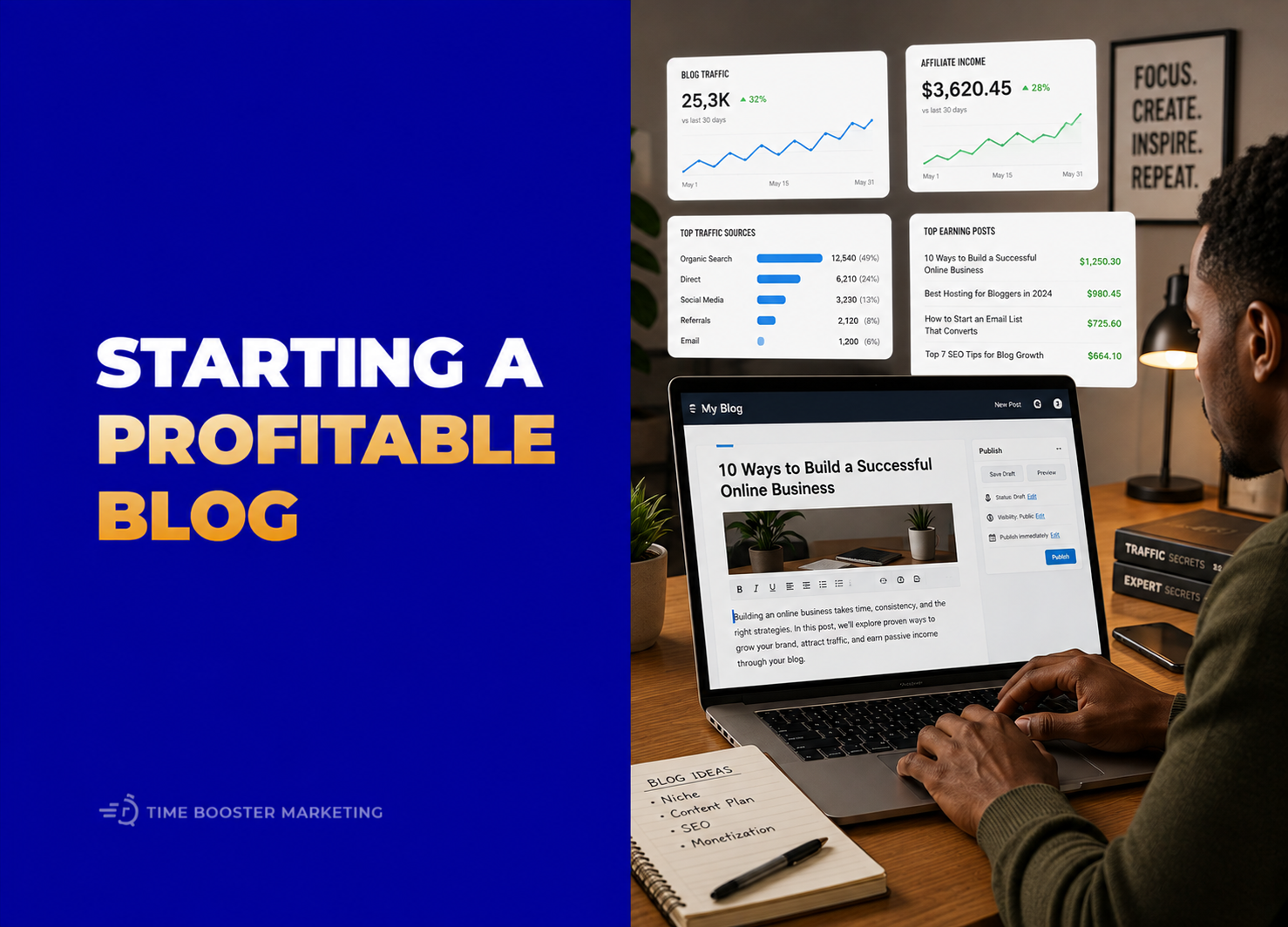
Originally published by Time Booster Marketing
How to Start a Blog That Makes Money in Cameroon
Starting a blog in Cameroon is not difficult.
Making money from it is where the real work begins.
Many beginners buy a domain, install WordPress, publish three articles, and expect traffic or income immediately. When nothing happens, they stop. The problem is not blogging itself. The problem is starting without a niche, content plan, SEO strategy, monetization model, or patience.
A profitable blog is not just an online diary. It is a content business.
It attracts a specific audience, solves specific problems, earns trust, and connects that trust to income streams such as ads, affiliate marketing, sponsored content, consulting, digital products, courses, services, or business leads.
Step 1: Choose a Blog Niche With Money Behind It
A niche is the topic your blog focuses on, but a profitable niche must go deeper than personal interest.
Ask three questions:
Who am I helping?
What problem do they need solved?
How can this audience eventually create income?
A weak niche says:
I want to blog about lifestyle.
A stronger niche says:
I help young Cameroonian professionals manage money, find opportunities, and build better careers.
A weak niche says:
I want to write about business.
A stronger niche says:
I help small-business owners in Cameroon use WhatsApp, Google, and social media to get customers.
Profitable blog niches in Cameroon can include:
- small-business marketing
- career and remote work
- education and exam preparation
- personal finance
- real estate guidance
- travel and local tourism
- food and restaurants
- parenting and family life
- agriculture and agribusiness
- technology tutorials
- faith and personal development
- health education, with qualified expertise
Choose a niche where people search for answers, compare options, spend money, or need ongoing guidance.
Step 2: Build the Blog on a Platform You Can Control
You can start blogging on free platforms, but a money-focused blog should eventually have its own domain and website.
A domain like yourbrand.com looks more serious than a free subdomain. It also gives you more control over branding, SEO, advertising, analytics, and monetization.
For beginners, WordPress is a strong option because it supports blogging, SEO plugins, categories, pages, ads, affiliate links, and long-term publishing. Website builders can also work for simple blogs, but make sure the platform allows SEO control, analytics, fast mobile pages, and monetization features.
Before launching, create these basic pages:
- Home
- About
- Blog
- Contact
- Privacy Policy
- Services or Work With Me
- Category pages for major topics
A serious blog should not look abandoned. It should immediately tell visitors who the blog helps and why they should trust it.
Step 3: Write for Search Intent, Not Random Inspiration
Money-making blogs are built around what people search for.
Instead of only writing what you feel like writing, create content around real questions, problems, comparisons, costs, tutorials, and decisions.
For example:
How Much Does Website Design Cost in Cameroon?
Best WhatsApp Marketing Tools for Small Businesses
How to Apply for Remote Jobs From Cameroon
How to Register a Small Business in Cameroon
Best Places to Visit in Kribi for a Weekend
How to Prepare for the GCE Advanced Level
Google’s guide on creating helpful, reliable, people-first content recommends creating content for people first rather than content made mainly to manipulate rankings. That means your articles should solve real reader problems, not just repeat keywords.
Step 4: Learn Basic SEO Early
SEO helps your blog appear in Google Search when people look for topics you cover.
Google’s SEO Starter Guide explains that useful, reliable content is one of the most important factors influencing search visibility. For bloggers, that means quality matters more than stuffing keywords into weak articles.
Each blog post should have:
- a clear title
- one main topic
- useful headings
- practical examples
- internal links to related articles
- external links to credible sources
- original explanations
- mobile-friendly formatting
- a clear next step
Do not write 500-word generic posts copied from other websites. Write articles that answer the question better than what already ranks.
Step 5: Set Up Google Search Console
Google Search Console helps you understand whether Google is finding your blog, indexing your pages, and showing your content in search results.
Google describes Search Console as a free tool for monitoring, maintaining, and troubleshooting a website’s presence in Google Search. It shows impressions, clicks, indexing issues, queries, and page performance.
Use it to track:
- which articles are indexed
- which search queries show your blog
- which pages get clicks
- which articles need improvement
- which technical issues are blocking visibility
If you want your blog to make money from search traffic, Search Console is not optional.
Step 6: Publish With a 90-Day Content Plan
Do not publish randomly.
Start with a 90-day plan.
Month 1: Foundation Content
Publish eight to ten articles that explain your niche clearly.
Examples:
- beginner guides
- definitions
- common mistakes
- step-by-step tutorials
- local market explanations
Month 2: Search and Comparison Content
Publish articles that attract people making decisions.
Examples:
- best tools
- cost guides
- platform comparisons
- service comparisons
- “how to choose” articles
Month 3: Monetization Content
Publish articles that naturally support income.
Examples:
- product reviews
- service guides
- affiliate-friendly comparisons
- downloadable checklist pages
- consultation-focused articles
Consistency matters because search traffic takes time. A blog rarely makes serious money from the first few posts.
Step 7: Monetize With AdSense, but Do Not Depend Only on Ads
Google AdSense can help bloggers earn from display ads, but your site must meet eligibility requirements.
Google’s AdSense eligibility requirements say publishers need their own unique and interesting content, must comply with AdSense policies, and must be at least 18 or have a parent or guardian sign up.
Google’s AdSense availability page lists Cameroon as an available region in its French documentation, and Google’s payment-method documentation shows wire transfer availability for AdSense accounts in Cameroon. Always verify the current status inside your own AdSense account before building your entire income plan around ads.
AdSense works best when your blog has consistent traffic. If your traffic is low, ad income will likely be small.
That is why serious bloggers use multiple income streams.
Step 8: Use Affiliate Marketing
Affiliate marketing allows you to earn commission when readers buy through your link.
For example, a blog about websites can recommend hosting tools. A tech blog can recommend gadgets. A finance blog can recommend budgeting apps. A travel blog can recommend booking platforms. A business blog can recommend software.
Good affiliate content includes:
- honest reviews
- comparison articles
- tutorials
- “best tools” guides
- buyer guides
- case studies
Do not promote products only because they pay commission. Promote tools that genuinely help your audience. Trust is more valuable than one quick sale.
Step 9: Sell Services Through Your Blog
For many Cameroonian bloggers, services may bring money faster than ads.
A blog can attract clients for:
- consulting
- coaching
- writing
- design
- marketing
- tutoring
- web development
- business registration support
- training
- photography
- real estate support
For example, if you write useful articles about WhatsApp marketing for SMEs, business owners may hire you to set up their WhatsApp sales system. If you blog about career growth, readers may pay for CV reviews, LinkedIn optimization, or coaching.
Your blog builds authority. Your service converts that authority into income.
Step 10: Create Digital Products
Digital products can turn your knowledge into repeatable income.
Examples include:
- e-books
- templates
- checklists
- spreadsheets
- mini-courses
- study guides
- business documents
- content calendars
- budgeting tools
A blog about small-business finance can sell a cash-flow template. A blog about exams can sell revision packs. A blog about entrepreneurship can sell a business planning workbook.
Start simple. Do not build a large course before you know what readers actually want.
Step 11: Attract Sponsorships
Once your blog has a clear audience, brands may pay to reach that audience.
Sponsorship opportunities include:
- sponsored articles
- product reviews
- newsletter mentions
- banner placements
- social media bundles
- event coverage
- brand partnerships
A food blog can work with restaurants. A tech blog can work with device sellers. A business blog can work with software companies. A travel blog can work with hotels and tourism brands.
Sponsors care about audience fit, not only traffic. A smaller blog with a serious niche can be more valuable than a broad blog with random readers.
Step 12: Build an Email or WhatsApp Audience
Search traffic is powerful, but you should not depend only on Google.
Build a direct audience through email, WhatsApp, Telegram, or a community platform. Offer something useful in exchange for subscription:
- checklist
- guide
- template
- free mini-course
- weekly tips
- local opportunity updates
This protects your blog from algorithm changes. It also gives you a trusted audience when you launch a product, service, course, or sponsored campaign.
Common Blogging Mistakes to Avoid
Do not choose a niche only because it is popular.
Do not copy articles from other blogs.
Do not publish only AI-generated content without real insight, examples, or editing.
Do not chase AdSense before building traffic.
Do not ignore SEO.
Do not write for everyone.
Do not abandon the blog after one month.
Do not overload the site with ads so readers cannot enjoy the content.
Do not hide who you are if trust matters in your niche.
Google’s Search Essentials explains core requirements and best practices for appearing in Google Search, including making content accessible and useful. A blog built on copied, thin, or confusing content will struggle to create long-term trust or search visibility.

A Simple Blogging Monetization Roadmap
Start with this order:
First 30 days: choose niche, launch blog, publish foundation articles.
Days 31–60: improve SEO, submit sitemap, publish comparison and how-to content.
Days 61–90: add affiliate links carefully, create one service page, build email or WhatsApp capture.
Months 4–6: apply for AdSense if the site is ready, pitch small sponsors, create one digital product.
Months 6–12: update old articles, grow search traffic, improve conversion pages, build partnerships, and publish consistently.
The goal is not fast money. The goal is a content asset that compounds.
Blogging Can Make Money When It Solves Real Problems
A blog that makes money in Cameroon must do more than publish opinions.
It must serve a specific audience, answer real questions, rank for useful searches, build trust, and connect readers to income paths that make sense.
Ads can help. Affiliate links can help. Sponsorships can help. Services, consulting, courses, and digital products can often help even more.
Start with one audience. Choose a focused niche. Build a clean website. Write helpful articles. Learn SEO. Track performance in Search Console. Monetize gradually. Improve every month.
The bloggers who win are not the ones who publish the most random content. They are the ones who become useful enough that readers return, searchers trust them, and businesses want access to their audience.